Written by Marcia Jedd
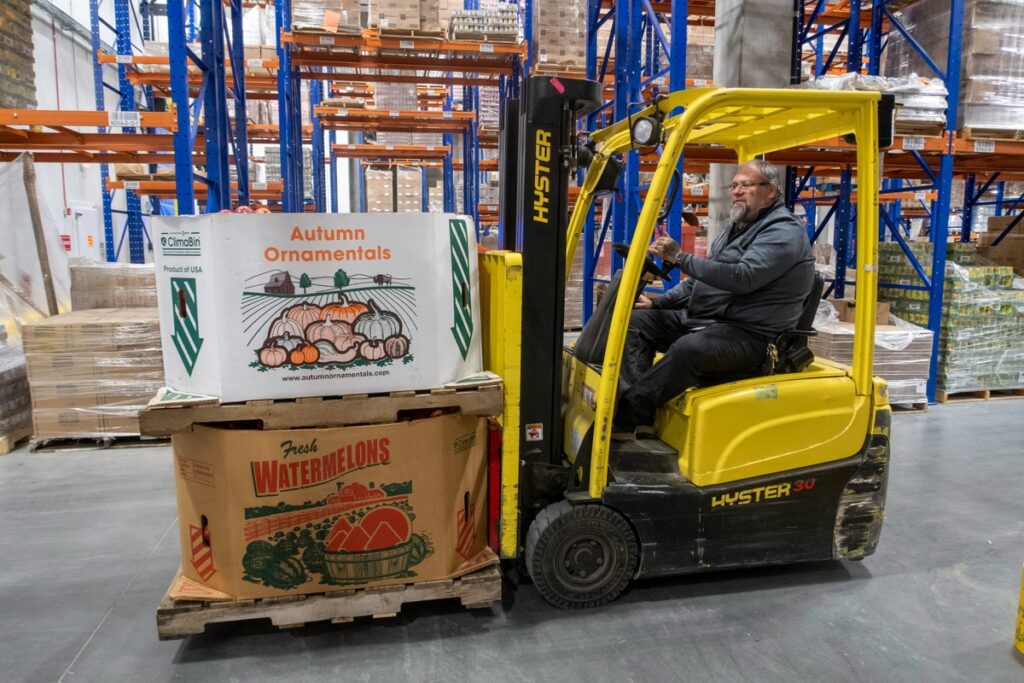
Whether you are a food and beverage distributor, processor, manufacturer or commodity producer, the proper handling and storage of your products is everything. For food and beverage companies, and especially for smaller, growing companies, the decision to start or maintain an in-house operation for warehousing (and to what extent) versus outsourcing to a 3PL is a critical decision to make with many variables.
Conducting a rigorous cost-benefit analysis for warehousing is especially important in a highly regulated sector like food and beverage because the stakes extend far beyond basic storage fees. There’s greater risk involved for financial or brand reputational exposure. Think losses from spoilage from temperature control failure, recalls, traceability gaps and manual tracking errors, equipment breakdowns or cross-contamination events. Warehouse processes must be highly efficient.
Here are some basic considerations when considering in-house warehousing versus outsourcing to a 3PL for food and beverage companies:
Fixed costs versus variable costs
While in-house warehousing might look straightforward on paper, the real cost structure includes facility costs (whether rent or mortgage costs, property taxes, insurance, utilities, etc.), maintenance, capital expenditures (CapEx) for equipment, among many other expenses. On the in-house side of warehousing, many companies underestimate costs involving facilities, labor, technology, compliance and the opportunity cost of capital.
Every dollar tied up in brick-and-mortar warehouse infrastructure, material handling equipment and IT systems is a dollar taken away from R&D, sales or marketing. And especially for growing brands, over-concentrating capital in fixed logistics assets introduces a heavy strategic tax on overall business agility.
So it makes sense that the strongest financial case for 3PLs is a blend of fixed pass-through and variable cost structures that they can offer. In short, maintaining in-house operations carries considerable fixed costs such as rent or lease costs, labor and other costs regardless of volume, while a multi-client 3PL network lets a shipper scale up in peaks and down in slow periods.
These flexible outsourcing models also give the needed agility to navigate sudden stock shifts, seasonal spikes and volatile trade conditions. Outsourcing warehousing to a 3PL also helps lessen the variable overhead that complicates landed cost calculations, giving stakeholders better visibility into true margins.
CapEx versus OpEx models
Given market forces such as supply chain volatility, trade shifts due to tariffs, and the need to hedge against price volatility, many manufacturers and distributors are steering away from fixed-cost, capital-intensive (CapEx) in-house models and moving to more flexible operating expense models (OpEx). Outsourcing to a regional 3PL converts a portion of fixed facility and equipment overhead into variable costs, allowing companies to absorb inventory surges.
Compliance costs
The compliance burden is complex and requires constant vigilance and oversight. Managing food and beverage warehousing in-house means absorbing a heavy, ongoing compliance overhead. Maintaining FDA registration, preparing for rigorous third-party audits (from bodies like AIB International, SQF/Safe Quality Food, and BRCGS) and meticulously documenting environmental controls—such as temperature logs, lot traceability and equipment maintenance to name a few—demand specialized internal resources.
On the in-house side, compliance costs include the internal resources required to maintain FDA registration and FDA compliance paperwork, managing and preparing for third-party audits, and other required paperwork such as documenting pest control programs. These are not one-time costs. They recur annually and require dedicated personnel or third-party consultants to manage properly.
For example, there’s heavy non-compliance penalties from failure to follow procedures under the FDA’s Food Safety Modernization Act (FSMA)—laws which focus on the prevention of food safety issues through required controls the food supply chain—including evolving rules, such as the new food traceability rules under FSMA Rule 204. The cost of non-compliance is high and extends beyond hard dollars to loss of brand reputation. This is where the compliance expertise of a food and beverage specialist 3PL and warehousing provider can help.
Ultimately, whether deciding to keep warehousing in-house or partner with a specialized 3PL, the analysis serves as a risk-mitigation shield protecting both company margins and consumer safety. For a detailed quote from a leading Midwest 3PL offering food-grade warehousing and distribution services, value-added services and temperature-controlled storage in food and beverage, contact the Worley team.