By Marcia Jedd
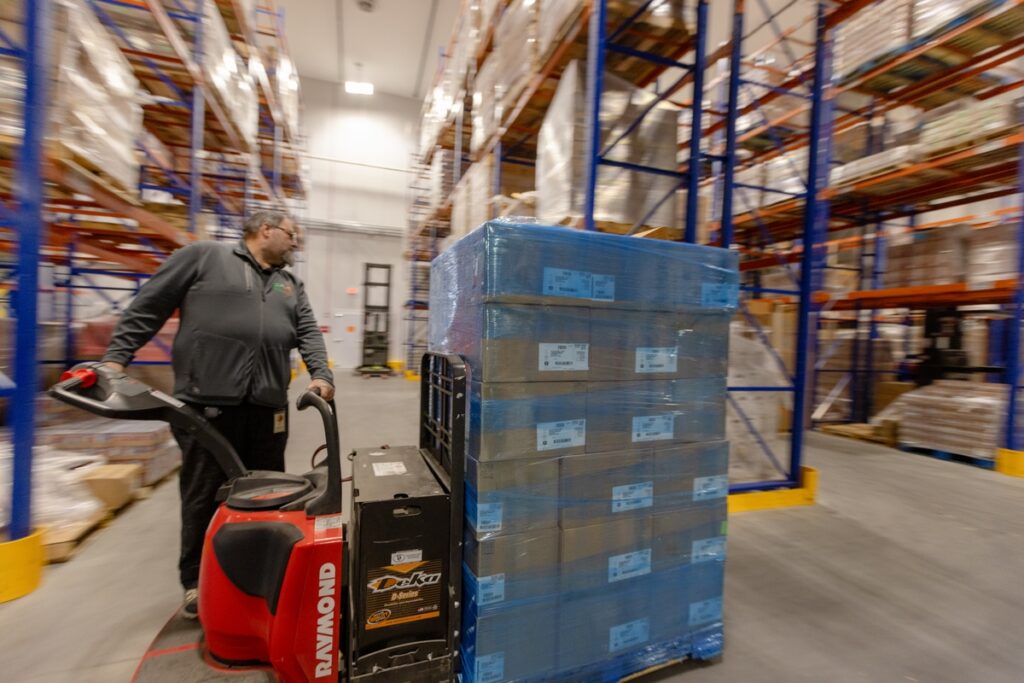
Heading into late summer 2026, U.S. warehouse utilization is reaching near-capacity levels as brands rush to position inventory ahead of the Q4 peak season. The challenge is orchestrating inbound and outbound flows alongside warehouse operations with precision and speed.
As we reported on earlier this year, there’s a big race for Class A warehouse space nationally. The Midwest is especially experiencing tight demand for industrial space driven by logistics efficiency, population proximity and reshoring. And in key hubs like Chicago, Columbus, and Milwaukee, modern Class A industrial real estate is commanding a massive cost premium.
Instead of taking on risky, expensive, short-term lease extensions for overflow space, operations managers are trying to find hidden capacity within their current four walls or within their own networks. Here are a few strategies to manage peak season:
Within the warehouse’s four walls, dynamic slotting supports the optimization of warehouse layout and productivity through the continuous reassignment of product storage locations based on real-time sales data such as order frequency, product turnover and seasonality. This often entails rearranging inventory based on sales data, including real-time demand patterns, ensuring that fast-moving items are easily accessible.
Unlike static slotting where items remain in fixed bins or locations, dynamic slotting adapts as demand changes, keeping fast-moving items nearest to packing stations thereby reducing picker travel time in the warehouse.
Of course systems such as WMS, tools like barcode scanning and other automated material handling systems support more efficient warehouse operations. The use of real-time data from these systems makes it easier to see where slotting changes can be made. Taking it one step further, dynamic warehouse slotting simulation and slotting optimization tools allow managers to virtually test, optimize and predict the placement of SKUs based on real-time demand, order affinity and seasonal trends —before making physical changes in the warehouse.
The opposite of today’s trend toward AI as a necessity, AI-heavy dynamic slotting systems may only be needed in super high-volume settings and where there are daily shifts in demand. While AI and machine learning are increasingly popular for optimizing complex or unpredictable environments, many systems rely on traditional, rules-based algorithmic methods and heuristics such as strict ABC inventory analysis.
Microslotting
Going even further within the four walls of the warehouse, microslotting maximizes existing warehouse space and use of human resources to ensure productivity and safety. Microslotting is the data-driven process of determining the exact, item-level placement of individual SKUs on specific shelves, bins, or pallet positions and strategic placement of pick zones. Think placing goods in the appropriate size bin and location based on their size, dimension and weight.
While macro-slotting determines broader warehouse zones, microslotting optimizes the precise location to minimize picker travel, improve ergonomics and maximize space. Suited for e-commerce distribution and piece-level picking, microslotting is a key capability of automated e-commerce systems, such as automated storage and retrieval systems (AS/RS) and goods-to-person robots, which require exact dimensional and locational data to function.
Now with automation and AI-driven dynamic slotting and advanced techniques, high-volume facilities are making big gains by continually reposition items based on real-times sales data, co-purchasing patterns and even social media trends. These gains in operational efficiency include drastic reductions in picking travel time, increased fulfillment speed and labor productivity. Did you know that picker travel time consumes up to 60% of fulfillment time? With AI-driven dynamic slotting, picker travel times can be reduced by 30% – 50%.
Dynamic inventory positioning and staging
Dynamic inventory positioning and dynamic inventory staging practices are more commonly adopted today by larger 3PLs, e-commerce fulfillment providers, and manufacturers and distributors in retail, CPG, food and beverage, among other sectors. Both of these strategies come in handy during periods of peak shipping and seasonal inventory surges.
A dynamic inventory positioning strategy is all about inventory deployment and flow. It considers which facility or node to store or ship your items from—across an entire supply chain or network. Actions may include moving inventory between reserve and forward pick locations and placing inventory closer to outbound operations during peak season or allocating inventory across multiple facilities or regions.
This strategy uses real-time data and may use predictive analytics to decide where to place stock geographically to best serve customers to meet current or future demand. It decides which regional fulfillment center (Chicago hub vs. Dallas hub, for instance) should hold the product to reduce shipping costs and delivery times.
With the four walls of a facility, dynamic inventory staging involves temporarily holding goods in temporary floor locations as assigned by the WMS in real time. Instead of using fixed loading dock lanes, for example, the system adapts to factors like delivery type, carrier or order size to organize and speed up packing.
With dynamic inventory staging, warehouses have a number of ways to temporarily reconfigure storage and staging areas as volumes increase. These include placing fast-moving SKUs closer to shipping and packing areas or creating overflow zones for inbound seasonal inventory. Efficiencies gained are often reduced in-warehouse travel time and congestion, improved labor productivity and throughput during peak shipping periods, high-volume inbound periods or during promotional periods. Warehouse operators are also able to better support rapid changes in inventory mix and order profiles.
As these strategies illustrate, there’s a lot that shippers and 3PL warehouse operators can do to find hidden capacity within their four walls and their supply chain networks to reap efficiencies and stay ahead of the strains of peak season shipping demands.